

Contact Us
Contact Indispensable Health
Touch Base With Our Indispensable Team By Filling Out The Form Below
Email: info@indispensablehealth.com
Indispensable Health’s Office is Headquartered in Michigan
Mailing Address: PO Box 842, Grass Lake, Michigan 49240
Our Main Office is Located at at 114 E Michigan Ave. Suite 2 Grass Lake, Michigan
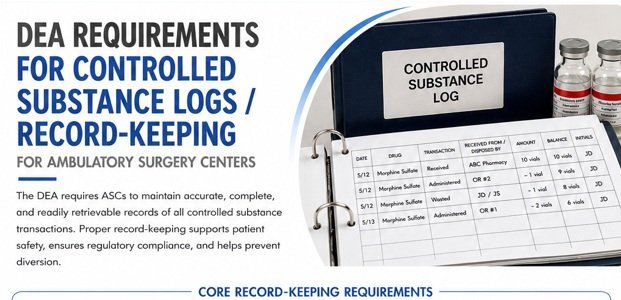
The DEA requires ASCs to maintain accurate, complete, and readily retrievable records of all controlled substance transactions. Note that some states may have more stringent requirements than that of the DEA. Be sure to comply with federal DEA regulations and applicable state law, whichever is more stringent.
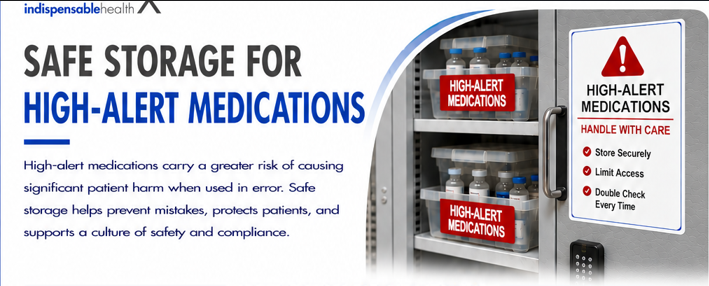
For High-Alert Medications, thoughtful storage practices can help reduce risk by making these medications easier to identify, differentiate, and handle safely. Here are several strategies ASCs can incorporate into their medication storage practices.
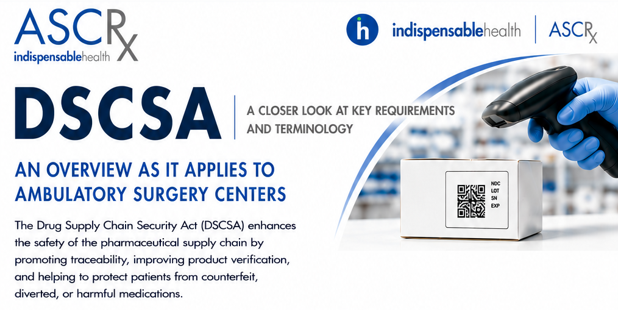
The Drug Supply Chain Security Act (DSCSA) establishes requirements for tracking prescription drugs through the U.S. supply chain. As an ASC, you play a role in ensuring that all prescription drugs are obtained from authorized sources and that any suspect products are addressed promptly.
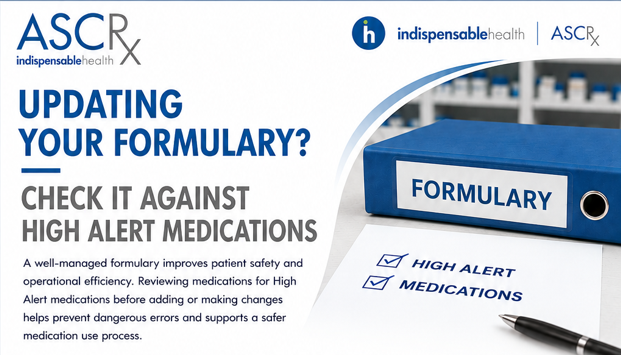
The AAAHC Quality Roadmap shows that among Surveyor Findings are:
High-alert...lists absent, outdated, or not aligned with formulary;
ISMP references not current;
High-alert medication safeguards not established;
Medications not consistently identified, labeled, segregated, or
differentiated;Staff unaware of high-alert medications
Guidance from AAAHC is to "Implement a comprehensive medication safety framework that defines facility-specific high-alert ... medications using current ISMP and ECRI resources, with annually
updated lists posted in all medication storage and preparation areas."

The AAAHC Quality Roadmap shows that among Surveyor Findings is “… unreliable refrigeration monitoring…”.
Guidance includes to “Strengthen temperature monitoring and environmental controls using refrigerator-specific logs with minimum and maximum temperatures, defined corrective actions for excursions...”.
The bottom line: when there is an excursion, regulators and accreditors want to see that you have a reliable process — not just that nothing went wrong.
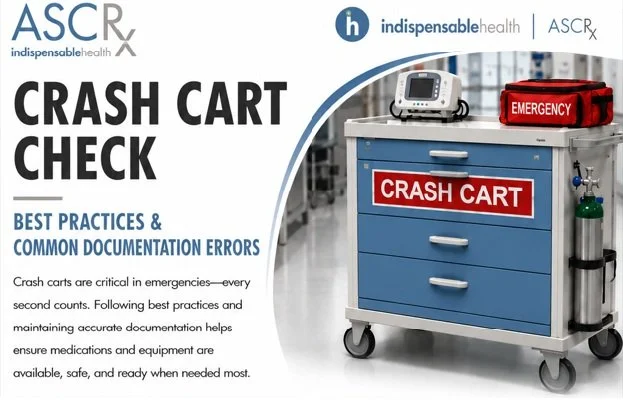
The AAAHC Quality Roadmap shows that among Surveyor Findings is “… expired crash cart supplies…” and “Crash carts locked with keys or secondary locking mechanisms…”
Guidance includes to “Maintain fully stocked, functional, and readily available emergency equipment, including crash carts…” and to “Use breakaway seals instead of locks…”.
Read below for more of what our Indispensable Health ASCRx Pharmacist Consultants see and recommend pertaining to crash carts.
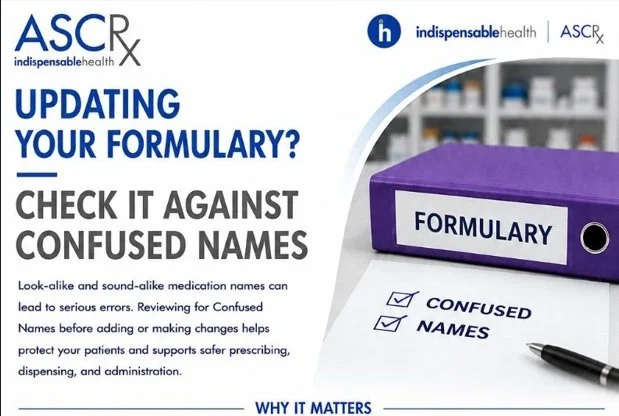
Before adding a medication to your formulary, take a moment to check for potential Confused Names.
Look-alike and sound-alike medications can contribute to serious medication errors. A quick review during the formulary process can help identify risks, support safer medication use, and protect patients. This edition’s tip highlights a simple approach to evaluating formulary changes for Confused Names.
Small and rural hospitals face a structural margin gap: input costs (labor, drugs, supplies) are rising faster than payment rates, while administrative friction drains resources. In 2025, total hospital expenses grew 7.5%—more than twice the rate of price growth—with drugs up 13.6% and supplies up 9.9%; hospitals also spent an estimated $43B just to collect payment for care already delivered [1]. Nearly half of rural hospitals are in the red and hundreds are at risk of closure, with OB and chemotherapy service lines shrinking across the map [2–3]. Leaders who stabilized in 2025 did so by protecting core access services, redesigning low-volume lines, and scaling what works [4].

In today’s healthcare landscape, remote pharmacy services are becoming a vital part of how hospitals, pharmacies, and ambulatory surgery centers operate. These services offer convenience, efficiency, and the potential to improve patient care. But one of the biggest questions on everyone’s mind is: What are the costs involved? Understanding the financial side of remote pharmacy services is essential for making smart decisions that benefit both your organization and the patients you serve.