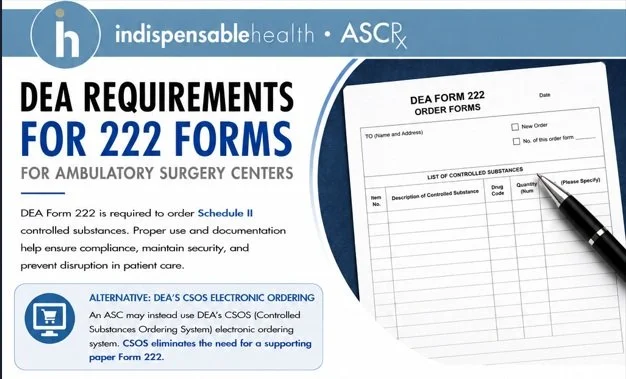
DEA Form 222 is an official order form used by DEA registrants to purchase and transfer Schedule II controlled substances.
Read More
DEA Form 222 is an official order form used by DEA registrants to purchase and transfer Schedule II controlled substances.
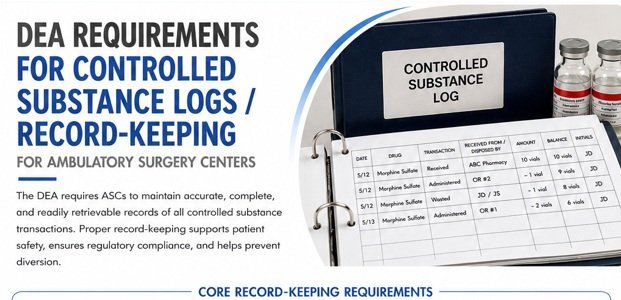
Read MoreThe DEA requires ASCs to maintain accurate, complete, and readily retrievable records of all controlled substance transactions. Note that some states may have more stringent requirements than that of the DEA. Be sure to comply with federal DEA regulations and applicable state law, whichever is more stringent.
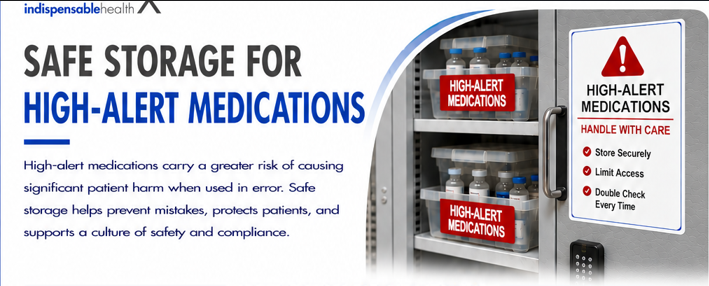
Read MoreFor High-Alert Medications, thoughtful storage practices can help reduce risk by making these medications easier to identify, differentiate, and handle safely. Here are several strategies ASCs can incorporate into their medication storage practices.
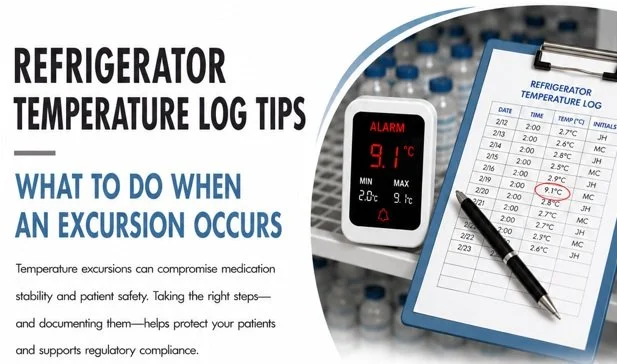
Read MoreThe AAAHC Quality Roadmap shows that among Surveyor Findings is “… unreliable refrigeration monitoring…”.
Guidance includes to “Strengthen temperature monitoring and environmental controls using refrigerator-specific logs with minimum and maximum temperatures, defined corrective actions for excursions...”.
The bottom line: when there is an excursion, regulators and accreditors want to see that you have a reliable process — not just that nothing went wrong.
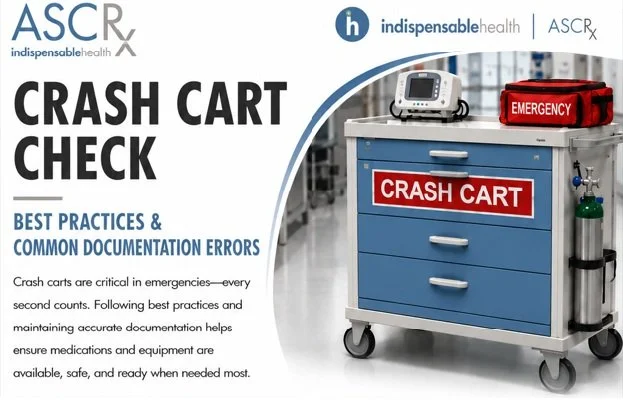
Read MoreThe AAAHC Quality Roadmap shows that among Surveyor Findings is “… expired crash cart supplies…” and “Crash carts locked with keys or secondary locking mechanisms…”
Guidance includes to “Maintain fully stocked, functional, and readily available emergency equipment, including crash carts…” and to “Use breakaway seals instead of locks…”.
Read below for more of what our Indispensable Health ASCRx Pharmacist Consultants see and recommend pertaining to crash carts.
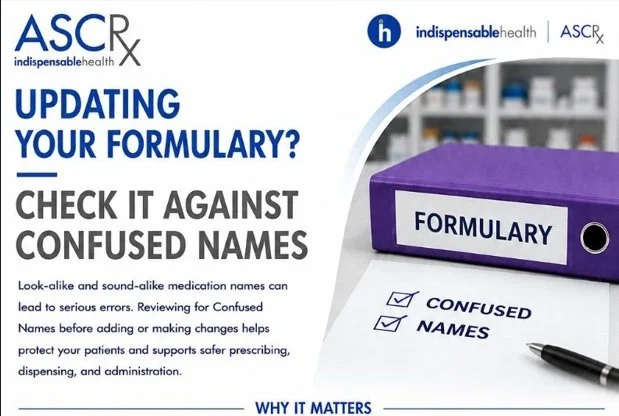
Read MoreBefore adding a medication to your formulary, take a moment to check for potential Confused Names.
Look-alike and sound-alike medications can contribute to serious medication errors. A quick review during the formulary process can help identify risks, support safer medication use, and protect patients. This edition’s tip highlights a simple approach to evaluating formulary changes for Confused Names.
Read MoreStephanie, an Indispensable Health Pharmacist in our new ASCRx Program discusses her role at Indispensable Health, how she discovered our pharmacy service company, and the job responsibilities that’ve changed during throughout the years. Thank you for being Indispensable Stephanie!
Read MoreThe U.S. DEA Regulates Controlled Substances Within Multiple Healthcare Settings. These regulations require every healthcare setting to complete a biennial controlled substance inventory. Learn how to maintain compliance within your pharmacy.
Read MoreThe list of Confused Drug Names, formerly known as look-alike sound-alike (LASA) medications, has been expanded by the Institute for Safe Medication Practices (ISMP). What are some best practices for ensuring patient safety and reduce medication errors whenever these medications are administered?
Read MoreWhether an Ambulatory Surgery Center is in a pre-construction phase or has been operating for years, the following are 10 examples of questions to ask of any prospective pharmacy service partner.
Read MoreAmbulatory Surgery Centers (ASCs) require a pharmacy partner that can be flexible to their unique situations. Every ASC has various needs that pharmacy providers should provide custom services tailored to fit the outpatient surgery center’s needs.
Read More